


Everything you ask of AI leaves a footprint. Now it can leave forest.
Every AI query uses electricity, water and land. Tebu turns it into square meters of forest conserved for 30 years in a named habitat bank.
Become an ally of nature
How much do you use AI?
Where your contribution goes
Three steps to protect biodiversity
{{ s.d }}
Join.
Protect the biodiversity of Colombia from USD 1.99 per month.
{{ estHelp }}
{{ t.paisReq }}
{{ t.q2help }}
{{ t.q2note }}
{{ resTitle }}
{{ t.fundTxt }}
{{ aTxt }}
{{ t.s2H }}
{{ fpTitle }}
{{ fpNote }}
{{ t.note }}
{{ t.methodFull }}{{ t.cEy }}
{{ c.d }}
{{ reportText }}
{{ t.priceH }}
{{ t.pricePct }}
{{ p.mo }}
{{ t.faqH }}
{{ f.a }}
From an AI query to a biodiversity unit: how we measure and why we contribute.
Every time someone at your company writes to an artificial intelligence tool, a server switches on in a data center somewhere. It uses electricity, consumes water to cool down and sits on land that used to be something else. That footprint is small per query and huge in total, and until now almost no one was counting it. This document explains how Terrasos measures it, query by query and license by license; how it translates it into the language of biodiversity; and why, based on that measurement, every AI license funds one verified habitat unit.
The contribution is the commitment. They are two different things and we keep them apart.
The problem: a real footprint that appears in no report
In 2026 the Taskforce on Nature-related Financial Disclosures, the organization that defines how nature is reported worldwide, measured the footprint of the artificial intelligence it used to prepare its annual report and answered it by buying 110 Tebu units through Terrasos. It was the first time a reference institution treated AI use as an environmental impact to be measured and answered. What TNFD did once for one report, a company does every day across dozens of licenses, and it is not counting it.
High awareness, low measurement, distorted perception. The problem is not solved with fear, it is solved with an honest number.
The chain: from a query to kilowatts, liters and square meters
A query to a language model has three measurable pressures: the energy the server uses, the water that cools it and the land on which that electricity is generated. So as not to invent a number, we always report a range between two published, named studies. We name both and never average them.
We do not assign each query a share of the data center site, which is tiny. We assign it the land used to generate the electricity that query consumed, 25 to 130 times larger (Attenni et al., 2025, with factors from Lovering et al., 2022). That way land scales with use, just like carbon and water.
The translation: what a PDF is and why biodiversity is at the center
Imagine a natural area with one hundred species. If a pressure means that, for one year, two of those species can no longer live there, that place lost two percent of its life for that time. That is a PDF (Potentially Disappeared Fraction): the share of species a place could lose. It is the unit science uses to measure harm to biodiversity, not to the climate.
The strength of the method is that it translates all three pressures into that same language. Every kilogram of CO2, every cubic meter of water and every square meter of occupied land becomes how much biodiversity it puts at risk, using the factors of ReCiPe 2016, the standard scientific method for environmental impact assessment, with author, table and page (Huijbregts et al., 2017). It is the same method banks use to measure their biodiversity footprint.
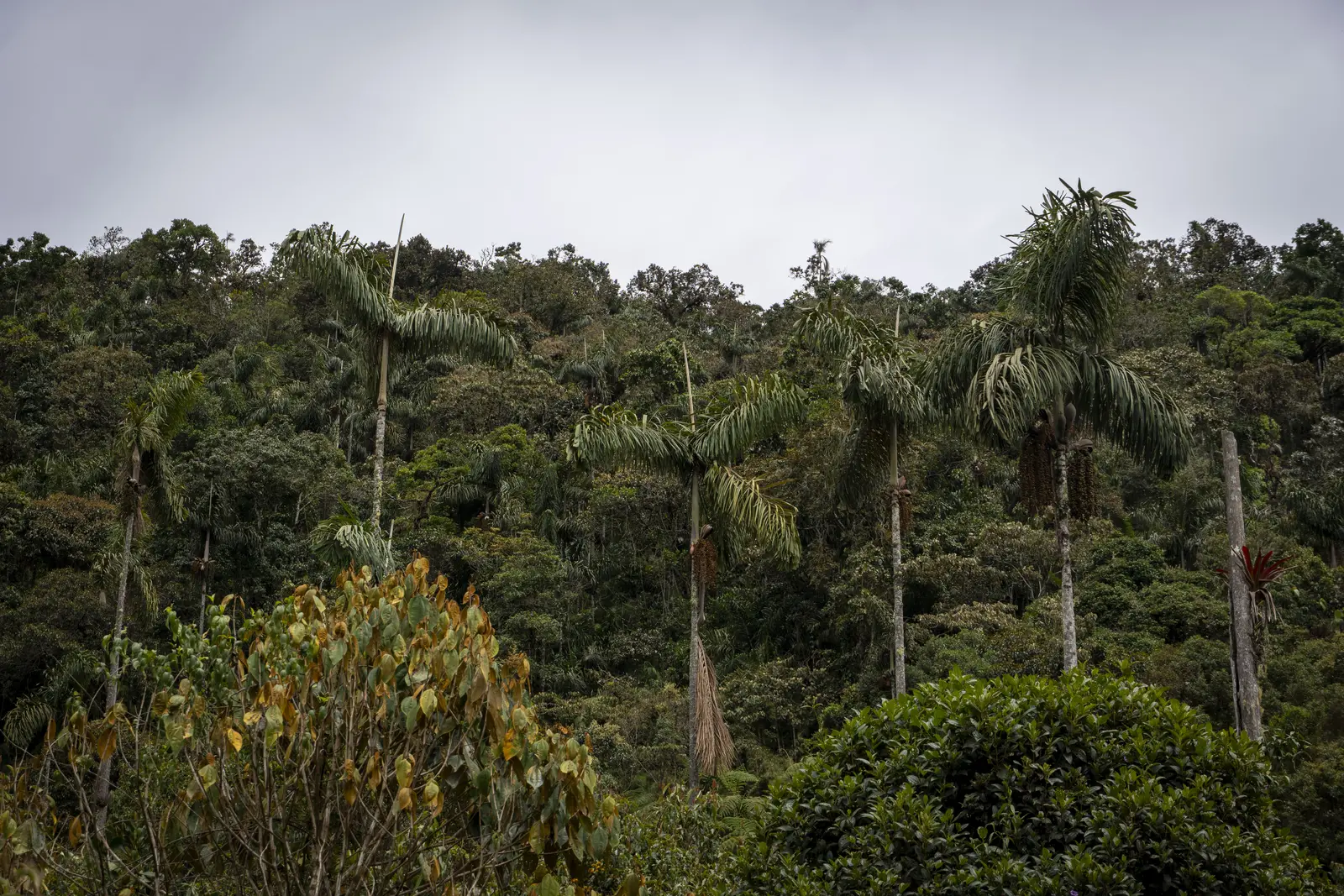
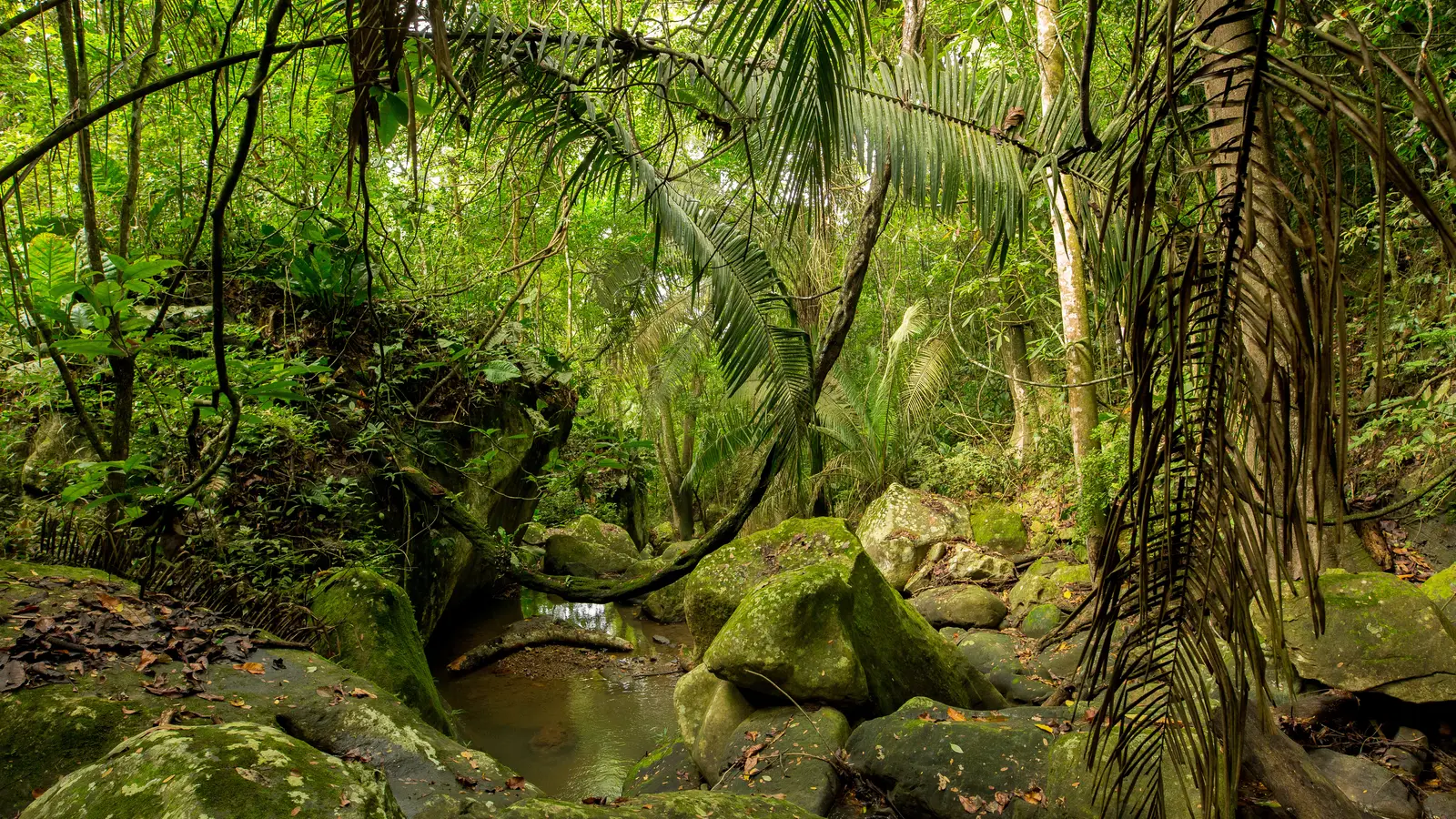
Climate change enters the calculation as one of the pressures on ecosystems, not as the goal itself. Biodiversity is at the center because it is what Tebu protects: ten square meters of habitat in a Terrasos habitat bank, with the species that live there, managed for thirty years.
The result: the footprint of one license against one habitat unit
Applying ReCiPe and a conservative adjustment for ecosystem type, the biodiversity footprint of one AI license is between 0.003 and 0.11 PDF per square meter per year, depending on whether only operation or the full life cycle is measured.
The figure is deliberately small, and it is honest that it is. An AI license does not destroy a forest. That is why a whole Tebu per license is not an offset sized to the damage; it is a broad contribution proportional to use.
The distinction that holds everything up: measuring and contributing are not the same
The biodiversity footprint of AI use, reported as a range between two named scopes, with the fields that disclosure frameworks require (EFRAG, 2025; TNFD, 2023).
The voluntary commitment the company takes on based on that measurement, sized by participation and not by damage, in the same logic with which Stripe Climate allocates a percentage of its sales without calculating anyone's footprint.
This separation is not a nuance of language; it is a legal obligation. Since September 27, 2026, EU Directive 2024/825 prohibits claiming neutrality or positive impact based on offsets, and in Colombia Decree 1369 of 2014 empowers the authority to sanction misleading environmental claims.
"[Company] funded [N] Tebu biodiversity units, equal to [N × 10] m² of habitat registered and managed for 30 years, as a contribution for its team's AI use. This contribution does not reduce its own impacts and is not an offset."
Saying less would be inaccurate. Saying more would be illegal. Gold Standard, 2024; Directive (EU) 2024/825A company with 40 AI licenses
The report includes both numbers, each with its source.
References
- Attenni, G. et al. (2025). Spatio-Temporal Shifting to Reduce Carbon, Water, and Land-Use Footprints of Cloud Workloads. arXiv 2512.08725.
- Bain & Company. (2026). CEO Sustainability Guide 2026: Sustainable AI.
- Capgemini Research Institute. (2025). Developing Sustainable Gen AI.
- Elsworth, C. et al. (Google). (2025). Measuring the Environmental Impact of Delivering AI at Google Scale. arXiv 2508.15734.
- EFRAG. (2025). ESRS E4, simplified version.
- Gold Standard. (2024). Claims Guidelines.
- Huijbregts, M. et al. (2017). ReCiPe 2016 v1.1. RIVM Report 2016-0104.
- Lovering, J. et al. (2022). Land-use Intensity of Electricity Production. PLOS ONE 17(7).
- Mistral AI, Carbone 4 and ADEME. (2025). Our Contribution to a Global Environmental Standard for AI.
- TNFD. (2026). TNFD 2026 Status Report, p. 39.
- European Union. (2024). Directive (EU) 2024/825.
Where to find your licenses and queries
No provider shows electricity, carbon or water per user. What they do show is how many people have a license and how many queries they made. Paths verified in each provider's official documentation on October 17, 2026; menu names may change.
{{ g.name }}
- {{ st }}
{{ g.src }}
Announce first. Report it always.
Limited places for the first companies announced at COP17.